

What Is Basement Underpinning? A Toronto Homeowner Guide
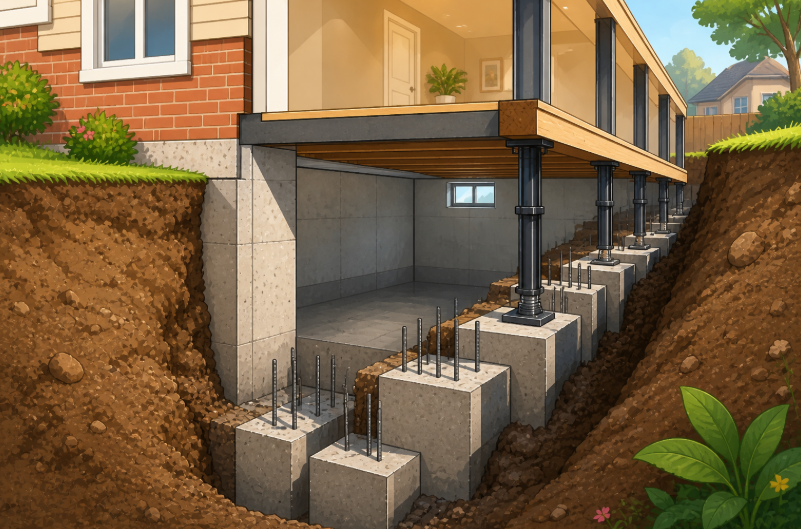
What Is Basement Underpinning?
Basement underpinning is the process of strengthening and extending an existing foundation downward to increase basement ceiling height and improve structural stability.
In Toronto, underpinning is commonly used in older homes to transform low basements into usable or legal living spaces.
Why Is Basement Underpinning Needed in Toronto?
Many Toronto homes—especially those built decades ago—have basements that were not designed for living.
Common issues include:
- Low ceiling height
- Limited usable space
- Outdated foundation structure
Underpinning allows homeowners to:
- Increase ceiling height
- Create legal basement apartments
- Improve long-term property value
How Does Basement Underpinning Work?
The underpinning process is completed in controlled stages:
- Excavation beneath sections of the existing foundation
- Pouring new concrete footings
- Lowering the basement floor
- Reinforcing structural integrity
This staged approach ensures the house remains stable throughout construction.
When Do You Need Basement Underpinning?
You may need underpinning if:
- Your basement ceiling is too low
- You plan to build a legal rental unit
- Your foundation requires strengthening
- You want to maximize usable space
Is Underpinning Required for Legal Basement Conversion?
In many Toronto homes, underpinning is necessary to meet building code requirements for legal basements.
These include:
- Minimum ceiling height
- Proper ventilation and safety
- Structural compliance
Without underpinning, many basements cannot qualify as legal living space.
Benefits of Basement Underpinning
- Increased usable space
- Higher property value
- Rental income potential
- Improved structural safety
Real Example (Toronto Project)
In a recent Toronto project, a century-old home required underpinning to support a legal multi-unit conversion.
By increasing the basement height, the space became fully functional and compliant with local regulations.
Expert Insight
Based on our experience with older homes in Toronto, underpinning is not just a structural upgrade—it’s a key step in turning underused basement space into valuable living or rental units.
Planning Basement Underpinning in Toronto?
If you're considering basement underpinning, it's important to evaluate your home's structure and long-term goals before starting.
At Reno Compass, we specialize in:
👉 Contact us to explore the right approach for your property.
