

Toronto Condo Renovation: 8 Japanese Apartment Design Ideas Worth Borrowing
When people talk about small-space living, Hong Kong often comes to mind.
However, Japan offers some of the most innovative apartment design solutions in the world.
In cities like Tokyo, Osaka, and Yokohama, many apartments are smaller than the average Toronto condo.
Yet these homes often feel organized, functional, spacious, and comfortable.
The secret is not more square footage.
The secret is smarter design.
For Toronto condo owners planning a renovation, Japanese apartment design offers valuable lessons that can significantly improve everyday living.
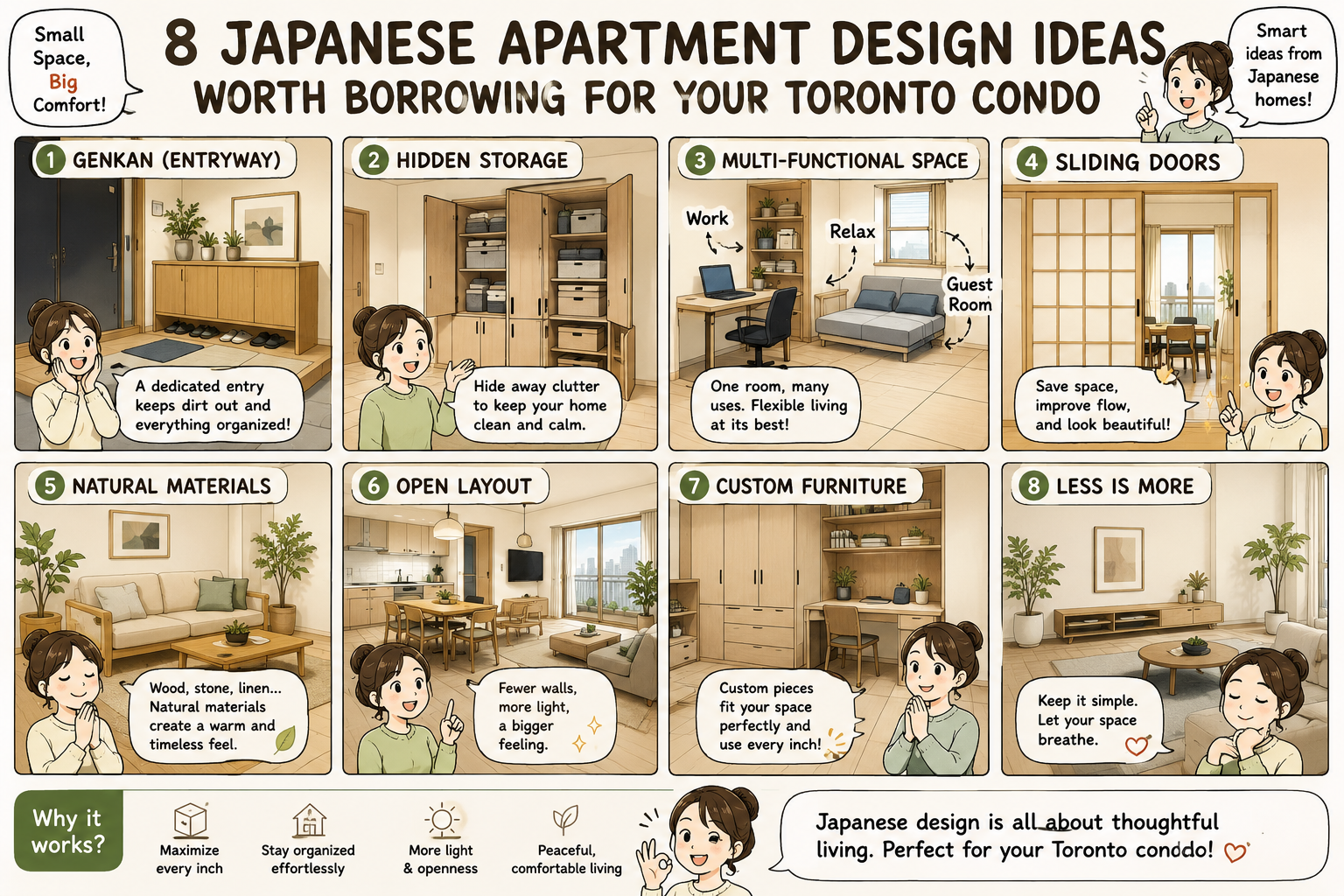
1. Create a Functional Entryway (Genkan)
One of the most recognizable features of Japanese homes is the Genkan, a dedicated entrance area that separates the outdoors from the living space.
Even in small apartments, this area serves multiple purposes:
- Shoe storage
- Coat storage
- Umbrella storage
- Package drop-off area
- Daily essentials organization
For Toronto condos, a custom entryway cabinet can dramatically improve both functionality and organization.
2. Prioritize Hidden Storage
Japanese apartments are famous for looking clean and clutter-free.
The reason is simple:
Storage is built into the design.
Common examples include:
- Under-bed storage
- Platform storage
- Floor-to-ceiling cabinets
- Wall-mounted storage systems
- Hidden compartments
By keeping everyday items out of sight, small spaces instantly feel larger and more relaxing.
3. Design Multi-Functional Spaces
In Japan, one room often serves multiple purposes.
A space may function as:
- A home office during the day
- A guest room at night
- A reading area on weekends
- A study zone for children
Flexible furniture and thoughtful layouts allow homeowners to maximize every square foot.
This concept is becoming increasingly popular in Toronto condo renovations.
4. Use Sliding Doors Instead of Swing Doors
Traditional doors require clearance space to open.
Sliding doors eliminate that issue.
Benefits include:
- Improved space efficiency
- Better traffic flow
- Cleaner visual lines
- Greater flexibility in room layouts
Sliding doors work particularly well for:
- Home offices
- Laundry rooms
- Walk-in closets
- Secondary bedrooms
5. Embrace Natural Materials
Japanese interiors focus heavily on natural textures and calming environments.
Common materials include:
- Natural wood
- Linen fabrics
- Stone surfaces
- Neutral color palettes
- Organic finishes
This timeless design approach creates a warm atmosphere that remains attractive for years without feeling outdated.
6. Open Up Shared Living Areas
Japanese apartments often minimize unnecessary walls between living spaces.
By connecting the:
- Kitchen
- Dining room
- Living room
the home feels larger and brighter.
Open-concept layouts improve:
- Natural light
- Visual flow
- Social interaction
- Space efficiency
This is also one of the most requested features in modern Toronto condo renovations.
7. Invest in Custom Furniture
Because every inch matters, Japanese homeowners frequently use custom-built furniture.
Examples include:
- Floor-to-ceiling wardrobes
- Built-in desks
- Storage platforms
- Custom shelving
- Integrated media units
Custom millwork allows homeowners to maximize awkward corners and underutilized spaces.
For condos, this can significantly increase both storage capacity and property value.
8. Practice the "Less Is More" Philosophy
One of the most important Japanese design principles is simplicity.
Instead of filling a space with decorative features, Japanese interiors focus on:
- Purposeful design
- Clean lines
- Minimal clutter
- Visual balance
A well-designed condo is not about adding more.
It is about making every element work harder.
The result is a home that feels calm, spacious, and comfortable.
Why Toronto Condo Owners Can Learn from Japanese Design
Japanese apartments and Toronto condos share many similarities:
- Limited square footage
- High storage demands
- Urban lifestyles
- Multi-purpose living requirements
As a result, many Japanese design strategies translate perfectly to condo renovations in Toronto and the GTA.
When square footage cannot increase, intelligent design becomes the most effective way to improve daily living.
The right renovation can make a small condo feel significantly larger, more functional, and more enjoyable to live in.
Frequently Asked Questions
Does Japanese-style design require a tatami room?
No.
Modern Japanese-inspired interiors focus more on space planning, storage, simplicity, and functionality than traditional tatami rooms.
Is Japanese design suitable for Toronto condos?
Absolutely.
Japanese design principles are particularly effective for one-bedroom and two-bedroom condos where space optimization is important.
Will a Japanese-inspired condo look too minimalist?
Not necessarily.
Natural wood, layered lighting, textures, and carefully selected furnishings can create a warm and inviting environment.
Can Japanese-inspired renovations improve resale value?
In many cases, yes.
Well-organized layouts, built-in storage, and timeless aesthetics are attractive to a wide range of future buyers.
Related Articles
- Hong Kong Condo Design Ideas Worth Borrowing
- Can a Condo Have Multiple Functional Zones?
- Does a Small Condo Limit Renovation Possibilities?
- Open Concept Condo Renovation Guide
Service Areas
Toronto
Markham
Richmond Hill
Vaughan
North York
Scarborough
Mississauga
Etobicoke
Brampton
Milton
Contact Reno Compass
📞 905-597-8566
If you are planning a condo renovation, kitchen renovation, bathroom renovation, whole-home renovation, basement renovation, commercial renovation, home rebuild, custom home project, or building permit application, contact Reno Compass to discuss solutions tailored to your property, budget, and long-term goals.
