

Toronto Home Addition Process: What Homeowners Should Know Before Building
Home additions have become one of the fastest-growing renovation trends in Toronto. Instead of moving to a larger home, many homeowners are choosing to expand their existing property to gain more living space, improve functionality, and increase long-term property value.
Whether you are planning a second-story addition, rear extension, garage addition, or a full layout upgrade, understanding the Toronto home addition process is extremely important before construction begins.
A home addition project involves much more than simply adding square footage. It usually requires permits, zoning review, HVAC planning, structural engineering, inspections, and compliance with the Ontario Building Code.
For homeowners planning a full home renovation in Toronto, understanding each stage of the process can help reduce delays, avoid costly mistakes, and improve the overall renovation experience.
What Is a Home Addition?
A home addition is a renovation project that expands the size of an existing home.
Common types of home additions in Toronto include:
- Rear home additions
- Second-story additions
- Side additions
- Garage additions
- Sunroom additions
- Multi-unit conversions
- Basement walkout expansions
In most Toronto renovation projects, a home addition also involves:
- Structural modifications
- HVAC system upgrades
- Plumbing and electrical work
- Interior layout redesign
Why More Toronto Homeowners Are Choosing Home Additions
Toronto real estate prices continue to rise, making moving increasingly expensive for many families.
As a result, many homeowners are choosing to expand and upgrade their existing property instead of purchasing a new home.
A home addition can help homeowners:
- Create more living space
- Improve family functionality
- Increase property value
- Upgrade outdated layouts
- Add rental potential
- Modernize older homes
Many Toronto full home renovation projects now combine home additions with interior redesign and HVAC upgrades.
- Building permit approval
Because of this, proper planning is essential before construction starts.
What Is the Toronto Home Addition Process?
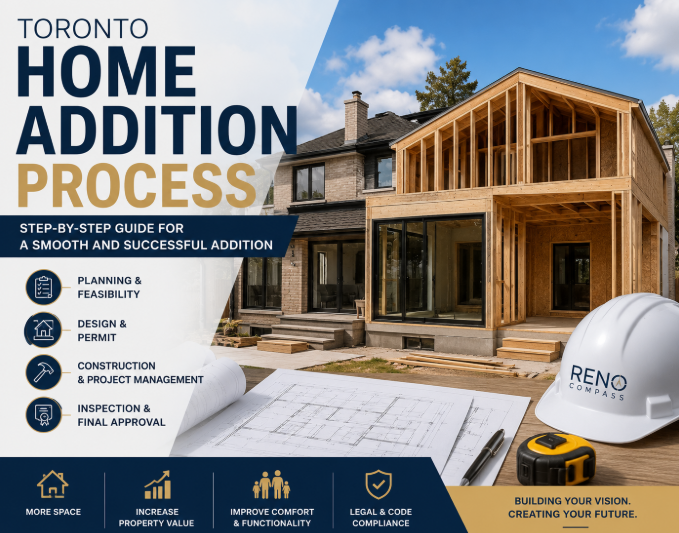
The typical Toronto home addition process includes:
- Site assessment and feasibility review
- Design and space planning
- Permit application
- Structural and HVAC review
- Construction phase
- City inspections
- Final completion and approval
Each stage plays an important role in determining the timeline, budget, and success of the renovation project.
Step 1: Site Assessment and Feasibility Review
Before starting a home addition project, a professional Toronto renovation company will usually perform a detailed site assessment.
This stage evaluates:
- Existing home structure
- Lot size
- Backyard space
- Ceiling height
- Foundation condition
- HVAC system capacity
- Toronto zoning requirements
Many homeowners do not realize that not every property can support a home addition.
For example:
- Setback restrictions
- Lot coverage limitations
- Structural concerns
- Height restrictions
can all impact permit approval.
This is why early planning is extremely important.
Step 2: Design and Interior Planning
The design phase involves much more than aesthetics.
A successful Toronto home addition project must also consider:
- Functional layout planning
- Natural lighting
- HVAC duct routing
- Staircase placement
- Structural load requirements
- Fire separation rules
- Window and egress standards
Many homeowners also combine their home addition with:
- Kitchen renovations
- Open-concept redesigns
- Basement renovations
- Whole home upgrades
As a result, home additions are often closely connected with Toronto interior design projects.
Step 3: Building Permit and Code Review
Building permits are one of the most important parts of any Toronto home addition project.
Most additions in Toronto require permit approval before construction begins.
The permit review process may involve:
- Toronto zoning review
- Ontario Building Code compliance
- Structural engineering
- HVAC system review
- Fire protection requirements
- Energy efficiency standards
If the project does not meet requirements, homeowners may face:
- Permit rejection
- Drawing revisions
- Construction delays
- Increased project costs
This is why many homeowners choose an experienced Toronto renovation company familiar with the local permit process.
External reference:
Toronto Building Permit Information:
https://www.toronto.ca/services-payments/building-construction/apply-for-a-building-permit/
Step 4: Construction and HVAC Installation
Once permits are approved, the construction phase begins.
Typical stages include:
- Demolition and preparation
- Foundation work
- Framing
- HVAC rough-in
- Plumbing and electrical installation
- Insulation and fireproofing
- Drywall
- Flooring and finishes
- Final inspection
HVAC planning is especially important in Toronto home addition projects.
After increasing the size of a home, the original HVAC system may no longer be sufficient.
Professional contractors usually evaluate:
- Furnace sizing
- Ductwork capacity
- Return air systems
- Fresh air ventilation
- Heat pump compatibility
Proper HVAC design helps prevent uneven temperatures and airflow problems after construction.
Common Problems in Toronto Home Addition Projects
Many problems occur before construction even starts.
Common issues include:
- Permit delays
- Budget underestimation
- HVAC design problems
- Structural complications
- Poor project coordination
- Long construction timelines
Working with an experienced contractor can significantly reduce these risks.
How Building Code Affects Home Additions
Building Code plays a major role in every Toronto home addition project.
In simple terms:
Building Code determines how a home must be built safely and legally.
It affects:
- Stair dimensions
- HVAC systems
- Fire safety
- Structural requirements
- Electrical systems
- Plumbing standards
- Basement egress windows
If construction does not meet Ontario Building Code requirements, the project may fail inspection.
Frequently Asked Questions
How long does a Toronto home addition usually take?
The timeline depends on the size and complexity of the project.
In general:
- Small additions may take 3–5 months
- Large second-story additions may take 6–12 months
Permit approval timelines can also affect the schedule.
Does a home addition require a permit in Toronto?
In most cases, yes.
Projects involving:
- Added square footage
- Structural changes
- HVAC modifications
- New bathrooms
usually require building permits.
Will a home addition affect my HVAC system?
Yes.
After expanding the size of a home, the existing HVAC system may no longer provide enough heating or cooling capacity.
Professional contractors typically reassess:
- Furnace capacity
- Ductwork layout
- Return air systems
- Ventilation requirements
to ensure proper airflow and comfort.
What is the difference between zoning and Building Code?
Zoning determines what can legally be built on a property.
Building Code determines how the project must be built safely and legally.
Both are important in Toronto home addition projects.
Conclusion
A home addition is much more than simply adding extra space.
It involves:
- Building permits
- HVAC planning
- Structural engineering
- Ontario Building Code compliance
- Interior design coordination
- City inspections
For homeowners planning a Toronto home addition or full home renovation, understanding the process early can help reduce risks, improve efficiency, and create a smoother renovation experience.
Working with an experienced Toronto renovation company can also make the permit and construction process significantly easier.
- Toronto Building Code Guide
- Toronto Legal Basement Renovation Process
- Toronto HVAC Rough-in Guide
If you are planning a Toronto home addition, full home renovation, or interior upgrade, it is important to understand the permit process, HVAC planning, and Building Code requirements before construction begins.
Phone: 905-597-8566
Website: https://www.renocompass.ca/
